Flow vs. Leveling in Coatings: A Formulator's Guide
Flow vs. Leveling in Coatings: A Formulator's Guide !
Flow governs how a coating spreads and wets a substrate during application; leveling governs how the wet film smooths out surface irregularities after application. The distinction is operationally critical: add a flow modifier when handling viscosity, shear-thinning behavior, or substrate wetting is the problem; add a leveling agent when surface defects such as orange peel, brush marks, or fish-eyes persist after the base rheology and solvent balance are already optimized. Before ordering full-scale samples, run a short drawdown at two wet-film thicknesses, measure 60° gloss and contact angle on the dried panel, and compare against your unmodified baseline.
Key Takeaways
Selecting the correct flow or leveling additive requires diagnosing the root cause first, then running a structured dosage-and-thickness grid before any pilot-line change.
| Point | Details |
|---|---|
| Flow vs. leveling distinction | Flow controls bulk spreading during application; leveling controls surface smoothing after application. |
| Diagnose before dosing | Fix substrate contamination and dispersion failures before adding any leveling agent. |
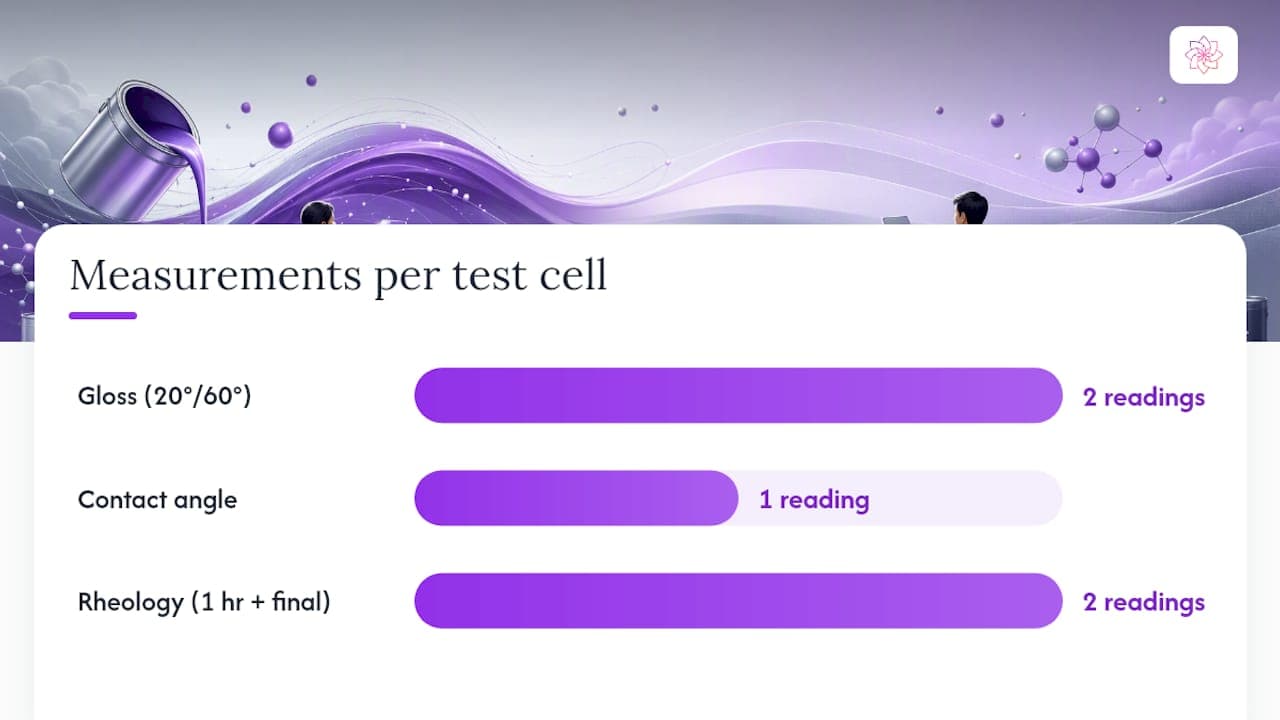
| Run a structured screen | Test 3 dosages × 2 film thicknesses; capture gloss (20°/60°), contact angle, and rheology at 1 hr and final cure. |
| Chemistry match matters | Use ASTRA LA® for long-wave leveling in solvent-borne systems; use ASTRA LA NS® where recoatability or adhesion is a hard requirement. |
| Astra-chemical next step | Request a three-dose sample pack with TDS and include binder type, PVC, and cure schedule in the submission. |
These two terms are frequently conflated in supplier literature, which creates real confusion at the bench. Precise definitions prevent misdiagnosis.
- Flow: The bulk spreading behavior of a coating under applied shear during application. It is governed by viscosity at relevant shear rates, thixotropic recovery, and the coating's ability to wet the substrate. Flow problems manifest as poor transfer efficiency, sagging, or incomplete coverage.
- Leveling: The film's ability to eliminate short- and long-wave surface irregularities after application, while the film is still mobile. Leveling depends on surface tension, viscosity, application parameters, and drying conditions — not just additive chemistry.
- Surface tension: The force driving the film toward minimum surface area; high surface tension gradients between adjacent film zones generate Marangoni flows that create short-wave defects.
- Wetting / contact angle: Low contact angle indicates good substrate wetting. Wetting agent selection directly affects whether the film spreads uniformly or dewets at edges and pores.
- Slip: Reduced surface friction from migrated surface-active species; relevant to mar resistance and DOI.
- Open time / coalescence: The window during which the film remains mobile enough to level. Extending open time with high-boiling solvents or coalescents directly extends the leveling window.
Key distinction: Flow and leveling are interdependent. Good flow prevents interfacial tension problems during application; good leveling minimizes surface area and eliminates short-wave and long-wave defects during film formation.
Why flow and leveling defects cost more than formulators expect
Poor leveling is rarely just an aesthetic problem. Orange peel on an automotive or industrial panel typically requires additional sanding cycles, recoating, or rejection, each adding direct material and labor cost. Reformulating to waterborne or high-solid systems often increases surface tension, commonly introducing leveling defects absent in solvent-borne predecessors — a frequent trigger for additive screening in low-VOC projects.
Improved leveling can also enable a reduction in applied film thickness while maintaining the same appearance grade, which translates directly to material savings per unit area. The trade-off is real, however: some leveling chemistries reduce intercoat adhesion or suppress gloss when the dosage or molecular weight is mismatched to the binder system. Selection, therefore, is not a commodity decision.
Formulators should test dosage and molecular weight variations because high-performance additives can negatively affect gloss or recoatability when mismatched to the system.
What formulation and process variables control flow and leveling?
Before reaching for an additive, evaluate these variables in priority order:
- Film formation speed: Faster solvent evaporation shortens the leveling window. Adjust solvent blend or add a high-boiling cosolvent before testing a leveling agent.
- Viscosity profile: Low-shear (zero-shear) viscosity governs sag resistance; high-shear thinning governs spray atomization and brush drag. A rheology modifier addresses bulk viscosity; a leveling agent addresses surface mobility.
- Surface tension and gradients: Marangoni flow from local surface tension differences drives short-wave defects. Surface-active additives reduce or equalize these gradients.
- Substrate surface energy: High contact angle on low-energy substrates (polyolefins, fluoropolymers) requires a wetting agent before leveling agents can function.
- Pigment loading and morphology: Platelet pigments (kaolin, talc) and high PVC formulations restrict film mobility and resist leveling; particle alignment can amplify orange peel.
- Application method and environment: Spray atomization, curtain coating, coil coating, and brush application each impose different shear histories and drying profiles. Temperature and relative humidity shift open time significantly.
Pro Tip: Isolate one variable per trial. If you change solvent blend and additive simultaneously, you cannot attribute the outcome to either change.
Which additive chemistries address flow and leveling?
| Chemistry | Primary Mechanism | Typical System Fit | Main Risk |
|---|---|---|---|
| Silicone (modified PDMS) | Strong surface tension reduction; long-wave leveling | Solvent-borne, high-gloss, coil | Intercoat adhesion, contamination |
| Polymeric acrylate | Surface rheology control; short-wave reduction; open-time extension | Waterborne, powder, UV-cure | Slight gloss reduction at high dose |
| Fluorocarbon-modified acrylate | Wetting on low-energy substrates; anti-cratering | Coil coatings, demanding wetting specs | Higher cost; regulatory considerations |
| Non-silicone polymeric | Wetting + leveling; coalescence extension | Waterborne; adhesion-sensitive systems | Lower surface tension reduction vs. silicone |
| Rheology modifier | Bulk viscosity and thixotropy control | All systems where sag or flow is primary | Does not address surface defects directly |
Silicone-based agents deliver the strongest surface tension reduction and long-wave leveling performance, but carry documented risk of intercoat adhesion failure and contamination unless EO/PO-modified side chains are selected for compatibility.
Polymeric leveling agents orient at the liquid/air interface to equalize local surface tension, reduce short-wave defects, and can extend open time — with lower contamination risk than unmodified silicones. Some grades reduce co-solvent requirements in waterborne systems.
Fluorocarbon-modified polyacrylates balance wetting, anti-cratering, and gloss improvement for demanding applications such as coil coatings, though cost and regulatory considerations apply.
When adhesion or recoatability is critical, non-silicone polymeric agents are the lower-risk starting point. In demanding specifications, combining a polymeric leveling agent with a modified silicone often captures substrate wetting plus excellent short-wave smoothing while limiting contamination risk.
How to select and request the right additive samples
Selection checklist — complete before contacting a supplier:
- Target substrate and surface energy (contact angle on bare substrate)
- Binder family and crosslink chemistry (epoxy, PU, acrylic, alkyd)
- VOC limit and solvent constraints
- Target wet-film thickness and DFT
- Application method and line speed
- Required gloss (20°/60°), DOI, and orange-peel grade
- Recoatability window and intercoat adhesion requirement
- Cure temperature and profile
Sample-request checklist — what to send the supplier:
- Binder resin type and PVC
- Current solvent blend and VOC level
- Target film thickness and cure schedule
- Baseline panel data: gloss, contact angle, defect description
- Request: TDS, recommended dosage range, molecular weight data, EO/PO content for PDMS grades, known incompatibilities, and a three-dose sample pack
Include ASTRA DISP® in the screening plan when pigment wetting or dispersion stability is a suspected contributor to surface defects. Add ASTRA DF® or ASTRA DF NS® if foam or pinholes appear during application trials.
What lab tests quantify flow and leveling performance?
| Test | Instrument / Method | Parameters to Capture |
|---|---|---|
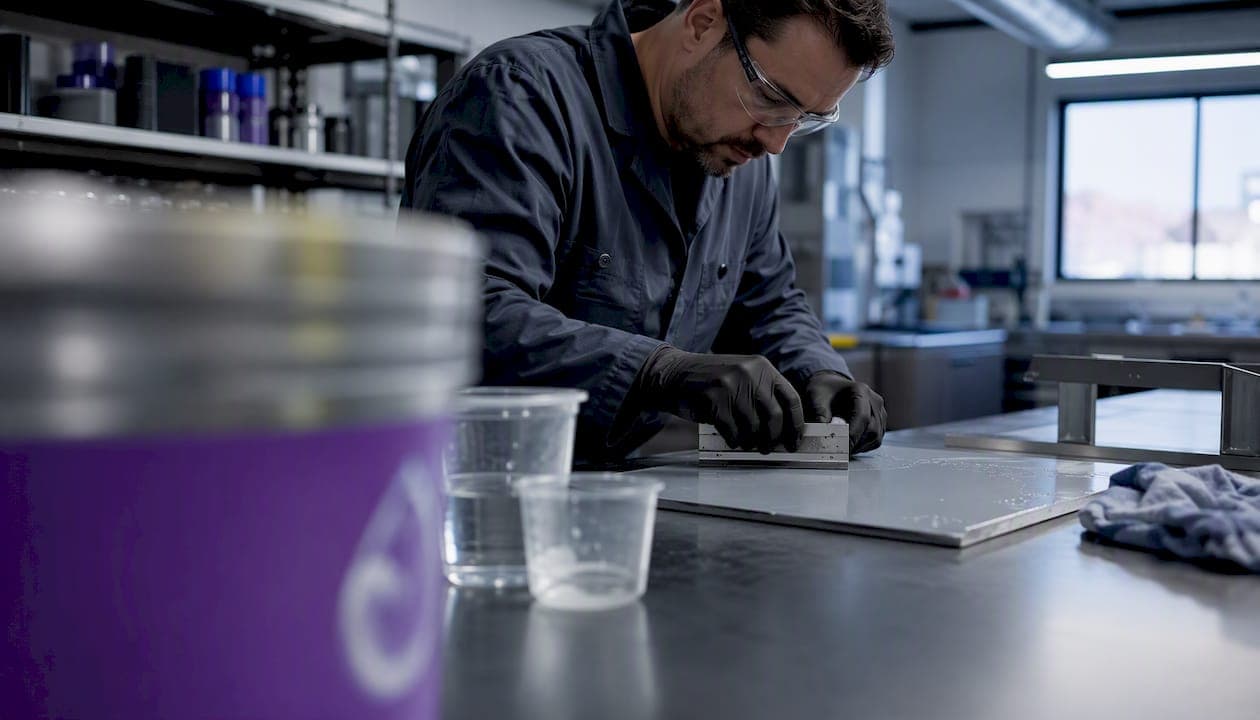
| Drawdown | K-bar or film applicator; two wet thicknesses | Wet thickness, substrate, temperature |
| Gloss | Glossmeter (20° and 60°) | At 1 hr and final cure |
| DOI / orange peel | Wave-scan or visual grading | Short-wave and long-wave scores |
| Contact angle | Goniometer | On substrate before and after additive |
| Rheology | Rotational rheometer | Low-shear (1 s⁻¹), zero-shear, thixotropy |
| Adhesion / recoat | Cross-cut | After full cure and after recoat window |
Step-by-step quick flow-out protocol:
- Prepare the baseline formulation and three additive dosages (low, mid, high).
- Apply drawdowns at two wet-film thicknesses on identical substrates.
- Condition at 23°C / 50% RH; record drying profile visually at 15-minute intervals.
- Measure 60° gloss and 20° gloss at 1 hour and at full cure.
- Measure contact angle on the substrate before application and on the cured film surface.
- Run a low-shear rheology sweep on each formulation before application.
- Conduct cross-cut adhesion and recoat tests after the specified cure window.
Pro Tip: Run a 3-dosage × 2-molecular-weight grid. This factorial screen reveals compatibility windows and dose-response relationships that a single-point test will miss entirely.
Troubleshooting surface defects: causes and corrective actions
- Orange peel: Typically high zero-shear viscosity or too-rapid solvent loss. Extend open time with a high-boiling cosolvent; test a polymeric leveling agent at mid-dose before increasing silicone content.
- Brush marks / application lines: Insufficient flow recovery after shear. Evaluate thixotropic profile; reduce high-shear viscosity or increase open time.
- Ghosting: Often a surface tension gradient from a contaminant or incompatible additive. Identify the source; reduce or eliminate the surface-active species causing the gradient.
- Craters / fish-eyes: Localized dewetting from a contaminant (oil, silicone overspray, substrate contamination). Clean substrate; test a wetting agent before adding a leveling agent.
- Pinholes: Entrapped air or solvent vapor escaping through a skinning film. Add ASTRA DF® or ASTRA DF NS® to the screening plan; slow the initial drying rate.
- Haze / clouding: Incompatibility between additive and binder, or moisture sensitivity in the film. Reduce additive dosage; check EO/PO content against binder polarity.
- Intercoat adhesion failure: Excess silicone migration to the film surface. Switch to a non-silicone grade or reduce PDMS dosage; test ASTRA LA NS® as a replacement.
Quick action protocol for plant trials:
- Change one variable per trial run.
- Record temperature, humidity, and line speed for every panel.
- Always run an unmodified control panel alongside each test panel.
When leveling agents will not help — and may cause harm
Adding a leveling agent to a system that already cures without defects under controlled conditions is unlikely to improve performance and may suppress gloss or reduce adhesion.
- If the root cause is pigment dispersion failure (agglomerates, flooding, floating), a leveling agent will not fix the underlying instability. Address dispersion with ASTRA DISP® first; surface defects from agglomerates require a dispersant solution, not a surface-active one.
- If the substrate is contaminated (oil, release agent, silicone overspray), leveling agents cannot overcome the dewetting force. Clean the substrate and retest the unmodified formulation before adding any additive.
- If cure temperature exceeds the thermal stability of the chosen chemistry, the additive degrades and may generate new defects. Match chemistry to the cure profile: fluorocarbon-modified acrylates generally tolerate higher temperatures than unmodified PDMS.
When a system performs correctly under controlled lab conditions but fails in production, the root cause is almost always environmental (temperature, humidity, substrate variation) or process-related — not a leveling agent deficiency. Diagnose before you dose.
How Astra-chemical applies these principles
Astra-chemical's leveling additive families are designed around the trade-offs described above:
- ASTRA LA®: Silicone-based leveling agent for long-wave leveling in solvent-borne and high-gloss systems. Product literature includes suggested dosage ranges and compatibility notes to guide initial screening.
- ASTRA LA NS®: Non-silicone polymeric leveling agent for waterborne and adhesion-sensitive systems where contamination risk must be minimized. Suitable where recoatability is a specification requirement.
- ASTRA DISP®: Dispersants for pigment wetting and dispersion stability; include in the screening plan when PVC or pigment morphology is a suspected contributor to surface defects.
- ASTRA DF® / ASTRA DF NS®: Silicone and non-silicone defoamers for foam control during application; screen alongside leveling agents when pinholes or entrapped air compromise film formation.
Astra-chemical's recommended screening process: request the TDS and suggested dosage range, ask for a three-dose sample pack, run the lab test matrix described above, and capture rheology, gloss, and adhesion data before any pilot-line change. Astra R&D Team involvement is available for compatibility checks and scale-up guidance. Formulators who have followed this protocol report measurable reductions in orange-peel severity and material savings from reduced applied film thickness.
Pro Tip: When submitting a sample request to Astra-chemical, include binder resin type, PVC, target film thickness, and cure schedule. This allows the R&D team to recommend ASTRA LA® versus ASTRA LA NS® and configure the three-dose test pack to your system.
The practical priority order matters more than chemistry selection
The Astra R&D Team's consistent observation across industrial coatings projects is that formulators reach for leveling agents too early in the troubleshooting sequence. Substrate preparation and dispersion quality account for a disproportionate share of surface defects that are subsequently misattributed to leveling chemistry. The correct sequence is: fix substrate and dispersion issues first, adjust solvent blend and rheology second, and introduce a leveling agent only when those variables are controlled and the defect persists.
When adhesion or recoatability is a hard specification, non-silicone solutions should be the default starting point, with silicone grades introduced only after confirming compatibility in the recoat test. Combination technologies — a polymeric agent paired with a modified silicone — are appropriate for demanding specifications where neither chemistry alone meets the full performance profile. The one operational rule that consistently prevents wasted trials: run a controlled 3-dose × 2-thickness matrix before any pilot-line change.
Astra-chemical: samples, screening, and technical support
Astra-chemical offers a direct path from bench screening to production-scale confidence. Submit a sample request that includes substrate type, binder family, PVC, wet-film thickness, cure profile, VOC constraints, and target gloss or DOI grade. Astra-chemical will configure a three-dose sample pack of the appropriate ASTRA LA® or ASTRA LA NS® grade, and can include ASTRA DISP® and ASTRA DF NS® for a complete compatibility screen.
Technical screening support from the Astra R&D Team is available for custom compatibility checks and scale-up planning. The full Astra-chemical additive catalog covers dispersants, defoamers, rheology modifiers, and leveling agents for coatings, inks, adhesives, plastics, and composites. Contact Astra-chemical to request samples and initiate technical screening.
Sources
- Leveling in Paints and Coatings
- Optimal Selection of Leveling Agent for Paints and Coatings
- Polymeric flow and levelling additives for water borne coatings
FAQ
What is the difference between flow and leveling in coatings?
Flow describes how a coating spreads and wets a substrate under applied shear during application; leveling describes how the wet film smooths out surface irregularities after application while still mobile. Both depend on surface tension and viscosity, but they operate at different stages of film formation.
When should a leveling agent be added to a formulation?
Add a leveling agent when surface defects such as orange peel, brush marks, or fish-eyes persist after the solvent balance, rheology, and substrate preparation are already optimized. If wetting or dispersion is the root cause, address those with a wetting agent or dispersant first.
What is the main risk of silicone-based leveling agents?
Silicone-based agents deliver strong surface tension reduction and long-wave leveling, but can cause intercoat adhesion failure or contamination if the PDMS grade is not modified for compatibility with the binder system. Non-silicone grades such as ASTRA LA NS® are the lower-risk alternative when recoatability is a specification requirement.
How many dosage levels should be tested when screening a leveling agent?
A minimum of three dosage levels across two film thicknesses is the recommended starting grid. This factorial approach reveals dose-response relationships and compatibility windows that a single-point test cannot detect.
Which Astra-chemical products cover leveling and related defect control?
ASTRA LA® covers silicone-based long-wave leveling; ASTRA LA NS® covers non-silicone leveling for adhesion-sensitive systems; ASTRA DISP® addresses pigment wetting and dispersion; ASTRA DF® and ASTRA DF NS® control foam and pinholes during application.
Recommended
Testing additives for this application?
Send us your current formulation challenge and our technical team will recommend an ASTRA product package for lab screening.