How to Achieve Uniform Effect Pigment Dispersion Without Losing Optical Effect
How to Achieve Uniform Effect Pigment Dispersion Without Losing Optical Effect ! Decorative title card with pigment and dispersant illustrations The best-practice route to stable effect pigment dispersion is controlled pre-wetting followed by measured mechanical energy, not brute-force milling.
The best-practice route to stable effect pigment dispersion is controlled pre-wetting followed by measured mechanical energy, not brute-force milling. Formulators should pair gentle pre-dispersion with a steric polymeric dispersant matched to the resin system, then apply high-energy milling only when the fineness of grind demands it. Excessive shear fractures the flakes and destroys the metallic or pearlescent effect the pigment was chosen to deliver. Astra R&D Team supports formulators working through dosage screening and scale-up on these systems.
TL;DR:
- Gentle pre-wetting and appropriate steric dispersants are critical to prevent flake fracture and maintain the optical brilliance of effect pigments during dispersion.
- Wetting, deagglomeration, and stabilization must be carefully controlled, with stabilization favoring polymeric dispersants in solventborne and apolar systems.
- Mechanical dispersion methods should match equipment to pigment behavior, avoiding excessive shear that causes flake damage, especially when scaling up or increasing throughput.
- Effective dispersant screening and tight process controls, such as monitoring viscosity and tint strength, prevent issues like re-flocculation and uneven optical effects.
- Astra-chemical offers tailored dispersant solutions and technical support to optimize effect pigment dispersion and prevent costly rework or damage.
Effect pigments do not behave like conventional organic or inorganic colorants. Aluminum flakes, mica-based pearls, and interference pigments are plate-like structures, not spherical particles, and their geometry is the entire point. Cornflake, silver dollar, and vacuum-metallized (VMP) aluminum flakes each produce a different visual result depending on their aspect ratio and how well they orient parallel to the substrate surface during film formation. That orientation is what generates brilliance and "flop," the shift in brightness and hue you see when viewing a panel from different angles.
Dispersion strategy has to protect that geometry while still breaking up agglomerates enough to spread evenly through the millbase. Get it wrong and you see specific, recognizable failure modes:
- Agglomeration — clumps of flakes that never separated, showing up as visible specks or grainy texture in the dry film.
- Flake fracture — over-processed flakes lose aspect ratio, producing a dull, washed-out metallic effect instead of sharp brilliance.
- Re-flocculation — flakes that separated correctly during milling clump back together in the can, often from inadequate stabilization.
- Poor wetting — incomplete surface contact between resin and pigment, visible as streaking or a "salt-and-pepper" mottled appearance.
Surface treatments (silica encapsulation, chrome passivation, or organic coatings) change oil absorption and wetting behavior substantially, so the dispersion approach for a treated pigment often differs from an untreated one of the same base metal.
Wetting, Deagglomeration and Stabilization: The Three Stages That Govern the Outcome
Every effect pigment dispersion process, regardless of equipment or scale, moves through the same three stages: wetting, deagglomeration, and stabilization. SpecialChem's dispersion framework treats these as sequential and interdependent, and skipping ahead almost always shows up as a defect downstream.
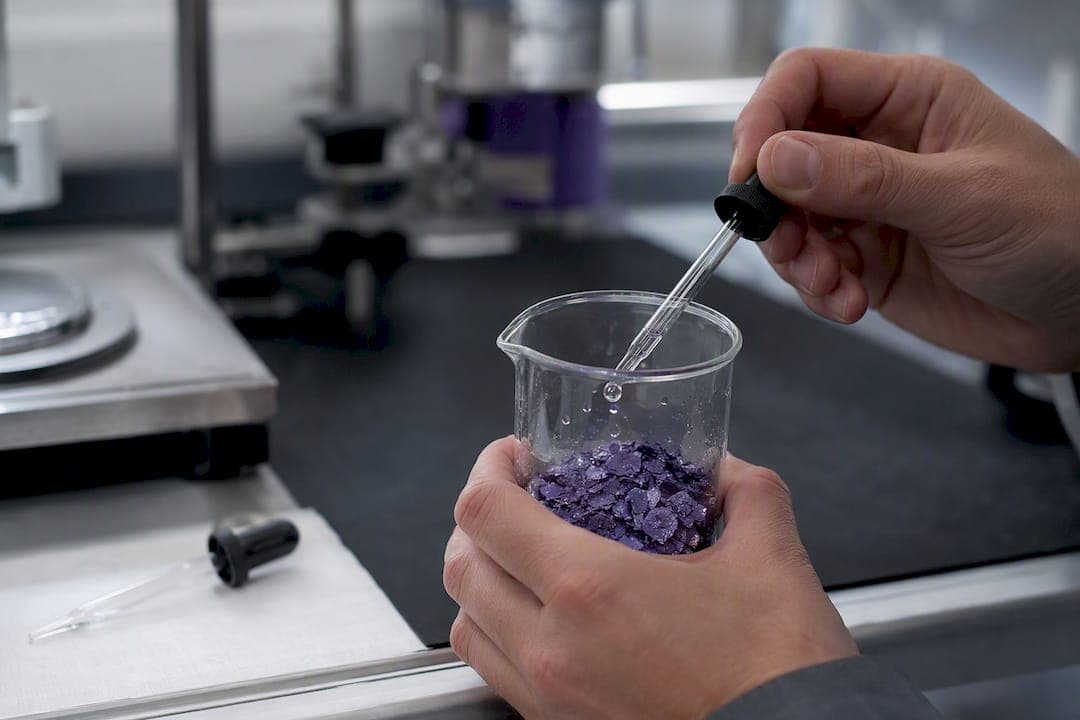
1. Wetting. The resin or vehicle has to displace air and moisture from the pigment surface before anything else can happen. This depends on the relationship between the liquid's surface tension and the pigment's surface energy. Effect pigments with high oil absorption (common with silica-encapsulated grades) may need lower millbase viscosity or a dedicated wetting agent to achieve full surface contact before mechanical energy is applied. If wetting is incomplete, no amount of subsequent shear fixes the problem. It just grinds air pockets and unwetted clumps into smaller air pockets and unwetted clumps.
2. Deagglomeration. This is where shear and impact forces separate agglomerated particles into primary particles or, for effect pigments, individual flakes. Low-to-moderate shear from a dissolver is usually sufficient for pre-dispersion; a bead mill is reserved for cases where fineness of grind targets cannot be met with gentler methods. That distinction matters more for effect pigments than for conventional color pigments, because bead milling introduces a real risk of flake fracture that pre-dispersion alone does not.
3. Stabilization. Once particles are separated, something has to keep them apart. Electrostatic stabilization relies on surface charge and is pH- and salt-dependent, which makes it common in waterborne systems but unreliable outside a narrow formulation window. Steric stabilization, achieved with polymeric dispersants that physically coat the particle surface, is generally the more reliable mechanism for plate-like effect pigments, particularly in solventborne and apolar systems where electrostatic repulsion has little to work with.
Pro Tip: Check millbase viscosity before you touch the mill. A viscosity that climbs sharply during pre-dispersion is often a wetting problem in disguise, not a sign you need more shear.
Mechanical Methods: Matching Equipment to the Pigment, Not the Other Way Around
Sweep mixing (low-shear, high-flow blending with a paddle or anchor impeller) is the gentlest option and the right starting point for pigments that are pre-wetted and only lightly agglomerated. It preserves flake orientation because it moves material without generating the localized high-energy zones that snap flakes apart.
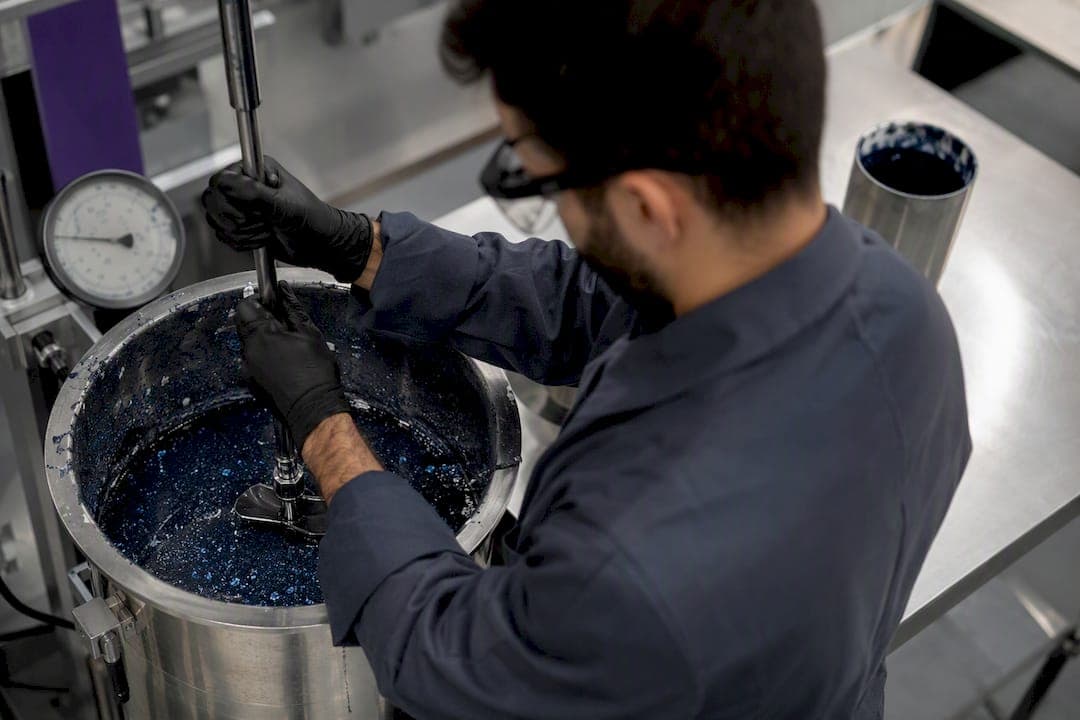
High-shear dissolvers step up the energy input using a saw-tooth or similar rotor at controlled tip speed. For effect pigments, tip speed and rotor-stator gap need tighter control than for conventional pigments, since excess local shear is exactly what fractures flakes. Heat buildup and air entrainment are the two things to watch: both promote flocculation and degrade the dispersion you just spent energy creating.
Bead or media milling delivers the highest deagglomeration force and should be treated as a last resort for effect pigments rather than a default step. Bead size, fill ratio, residence time, and cooling all need to be dialed in deliberately:
- Smaller beads increase impact frequency but raise the risk of flake fracture on aluminum and mica-based pigments.
- Cooling jackets or intermittent cycling prevent heat buildup that can degrade both the dispersant and the flake surface treatment.
- Overmilling shows up as a plateau or reversal in tint strength even as fineness of grind readings appear to improve.
The single most useful operational control across dissolver and mill setups is the doughnut flow pattern, the visible vortex shape that forms when impeller speed and batch geometry are matched correctly. Losing that pattern signals inefficient energy transfer and a higher risk of heat and air entrainment, both of which worsen flocculation rather than improving dispersion.
Pro Tip: Operate at constant power input rather than constant RPM when scaling up. Monitoring torque and power draw gives you a reproducible target that a fixed-speed setpoint cannot match batch to batch.
How Do You Select the Right Dispersant and Dosage?
Dispersant chemistry has to match the continuum the pigment lives in, not just the pigment itself. Steric polymeric dispersants generally perform best in apolar and solventborne systems, where there is no ionic environment for electrostatic charge to work with. Electrostatic and hybrid dispersants tend to fit waterborne systems better, though their performance depends on pH and electrolyte content.
Rapid screening lets you narrow the field before committing production-scale material:
- Run small-sample trials across a range of dispersant candidates and dosage levels, using dual-axial centrifuge or mini-mill protocols to minimize the pigment consumed per data point.
- Record tint strength at each dosage level and plot it against viscosity to find the inflection point where additional dispersant stops improving color development.
- Confirm the dosage on a viscosity curve. A well-chosen dispersant produces a sharp viscosity drop at low dosage, then a flat plateau. A poor match shows a shallow, inconsistent curve.
- Cross-check for defoamer interactions. Some dispersant/defoamer pairs destabilize each other, showing up as unexpected foam or re-thickening days after letdown.
Dosage is typically expressed as percent-actives relative to pigment solids, and the right number depends heavily on pigment surface area and treatment type rather than a single universal figure. Astra-chemical's dispersant selection guide walks through matching chemistry to solvent polarity in more detail for formulators building this decision into a broader additive package.
What QC Tests Confirm a Dispersion Is Actually Ready?
Fineness of grind, read on a Hegman or Gardner gauge, remains the fastest go/no-go check on the bench. Standard methods including ASTM D1210, ASTM D1316, and ISO 1524 define the procedure, though effect pigments need a different read than solid-color pigments: the target isn't the smallest possible particle size, it's the finest grind achievable without fracturing flake structure.
Three checks catch most problems before they reach production:
- Rub-out and tint-strength testing reveals uneven orientation and the salt-and-pepper mottling that signals incomplete deagglomeration, even when the Hegman reading looks acceptable.
- Torque and power monitoring during milling flags problems in real time. A sudden torque drop often means the batch has thinned unexpectedly; a climb usually means heat buildup or early flocculation.
- Product temperature tracking catches the point where cooling capacity is falling behind heat generation, typically the earliest warning sign of flake damage before it shows up visually.
A batch that passes Hegman but fails rub-out is a stabilization problem, not a grind problem. Sending it back through the mill usually makes it worse, not better.
A Step-by-Step Protocol From Millbase to Letdown
A repeatable checklist keeps operators from defaulting to "more milling" every time a batch looks uneven, which is the single most common way flake damage gets introduced on the floor.
- Prepare the millbase and pre-wet. Confirm resin/solvent surface tension is compatible with the pigment's surface treatment; adjust with a wetting agent if the pigment shows poor initial dispersion or unusually high oil demand.
- Pre-disperse with sweep or low-shear mixing. Hold tip speed conservative and monitor for the doughnut flow pattern rather than chasing a fixed mixing time.
- Check Hegman and tint strength. If both meet target, skip milling entirely. Many effect pigment systems never need a bead mill at all.
- Run short media-mill cycles with cooling breaks between passes if the pre-dispersion check falls short. Ten-minute cycles with a five-minute cooling interval is a reasonable starting point for lab-scale trials.
- Re-check Hegman and tint strength after every cycle. A plateau or decline in tint strength despite continued milling is your stop signal. That's flake fracture, not incomplete dispersion, and further milling only makes it worse.
- Stabilize and letdown. Confirm dispersant dosage is holding viscosity flat before adding remaining resin, solvent, and additives; film build and application method both influence how well flake orientation survives into the dry film.
Pro Tip: Keep a running log of Hegman and tint-strength readings against elapsed mill time for every new pigment lot. That curve becomes your fastest diagnostic the next time a batch behaves differently than expected.
Astra R&D Notes on Dispersing Plate-Like Pigments
Across the plate-like pigment systems Astra-chemical's technical team reviews, steric polymeric dispersants consistently outperform electrostatic alternatives in solventborne and high-solids formulations, largely because they don't depend on an ionic environment that solventborne systems can't reliably provide. Formulators working through dosage screening most often report two gains once dispersant chemistry is corrected: fewer visible defects at letdown and stronger, more consistent tint strength across production lots. Advanced approaches such as cellulose nanofiber stabilization exist for specific aqueous systems, though they remain formulation-specific rather than a general substitute for correct dispersant selection. Formulators facing a persistent re-flocculation or flake-fracture issue can request Astra's sample screening service for a dosage-matched recommendation before committing to a full batch trial.
Why Optical Effect Should Drive the Dispersion Decision, Not Throughput
The instinct on a production floor is almost always to run the mill longer when a batch looks uneven. That instinct is usually wrong for effect pigments, and the data backs this up: milling past the point where tint strength plateaus doesn't fix incomplete dispersion, it fractures the flakes you were trying to disperse in the first place.
Formulators chasing throughput should build in guardrails rather than skip steps: interim Hegman checks between mill passes, fixed cooling intervals, and a documented tint-strength curve for every pigment lot. Those checkpoints cost a few minutes per batch and save far more in rework. When a pigment system resists standard dispersant chemistry or the scale-up behaves differently than the lab trial predicted, that's the point to bring in outside technical support rather than iterate blindly on the mill floor.
— Astra R&D Team
Get Dispersant Screening Support From Astra-chemical
Getting the dispersion right the first time costs less than reworking a batch that re-flocculated in the can or fractured on the mill. ASTRA DISP® is Astra-chemical's polymeric dispersant line built for steric stabilization of plate-like effect pigments, and it's formulated to hold viscosity flat across the dosage range formulators actually screen for, cutting down on the trial batches needed to lock in a final formula.

Astra-chemical's technical team runs small-sample dispersant screening alongside dosage-curve analysis, so formulators get a matched recommendation before committing production material to a mill run. For systems where foam control is complicating a high-shear or milling step, ASTRA DF NS® non-silicone defoamers address air entrainment without disrupting dispersant performance. If your effect pigment system is fighting re-flocculation, uneven tint strength, or flake damage on scale-up, request a sample and technical consultation through Astra-chemical's product line to get a dosage recommendation matched to your resin system.
Sources
- Mixers
- Paint
- Pigment dispersion: definition for busy paints & inks formulators — SpecialChem
- Pigment dispersion procedures — PCI (PCImag)
FAQ
What Causes Poor Effect Pigment Dispersion?
The most common causes are incomplete wetting due to a surface tension mismatch, insufficient stabilization allowing particles to re-flocculate, and excessive shear or milling time that fractures flakes rather than just separating them.
How Do You Fix Re-Flocculation in an Effect Pigment System?
Re-flocculation almost always points to inadequate stabilization. Switching from an electrostatic to a steric polymeric dispersant, or increasing dosage to the point identified on a tint-strength versus viscosity curve, resolves most cases in solventborne systems.
How Do You Know if Milling Has Gone Too Far?
Watch for a plateau or decline in tint strength despite continued mill time, combined with a dull or washed-out optical effect in a rub-out test. That combination signals flake fracture, and further milling only makes it worse.
What Is the Difference Between Fineness of Grind and a Rub-Out Test?
Fineness of grind, checked with a Hegman or Gardner gauge, measures particle size distribution. A rub-out test evaluates flake orientation and color development, catching mottled or salt-and-pepper defects that a Hegman reading alone can miss.
Does Astra-chemical Offer Dispersant Screening for Effect Pigments?
Yes. Astra-chemical's technical team runs small-sample dispersant screening and dosage-curve analysis for formulators working with plate-like effect pigments, using ASTRA DISP® as the primary steric stabilization line for these systems.
Recommended
- Dispersants for Coatings: Selection & Dosage Guide (2026) | ASTRA CHEMICAL
- Additives for Polyurethane Coatings: Selection Guide (ASTRA) | ASTRA CHEMICAL
- Coating Additives Guide: Selection, Chemistry & Formulation (2026) | ASTRA CHEMICAL
- Switching Coating Additive Suppliers: A Step-by-Step Migration Guide | ASTRA CHEMICAL
Testing additives for this application?
Send us your current formulation challenge and our technical team will recommend an ASTRA product package for lab screening.