What Causes Color Strength Loss in Coatings and Inks
What Causes Color Strength Loss in Coatings and Inks ! Decorative title card illustration for chemical coatings article Color strength loss is the measurable reduction in a pigment's tinting power, whether the culprit is poor dispersion, flocculation, a shift in pigment crystal phase, or damage from…
Color strength loss is the measurable reduction in a pigment's tinting power, whether the culprit is poor dispersion, flocculation, a shift in pigment crystal phase, or damage from milling. The most common proximate causes, ranked by frequency in production troubleshooting, are under-dispersion and flocculation, incorrect dispersant selection or dosage, over-grinding, and pigment/solvent phase interactions.
Before escalating to a formulation rework, run three checks:
- Rub-up test: rub a wet film section with a finger or spatula; a color shift signals active flocculation.
- Visual grind inspection with a Hegman gauge: confirms fineness but not full particle size distribution.
- Small drawdown with spectrophotometric comparison: quantifies actual tint-strength loss against a known standard.
Key Takeaways
Color strength loss almost always traces back to flocculation, under-dispersion, over-grinding, or pigment purity drift, and each has a distinct diagnostic signature and fix.
| Point | Details |
|---|---|
| Run three fast checks first | Rub-up test, Hegman inspection, and a spectrophotometric drawdown together triage most cases within a day. |
| Flocculation mimics bad pigment | A rub-up color shift points to dispersant or binder incompatibility, not a defective pigment lot. |
| Hegman alone can mislead | A dispersion at Hegman 7 NS versus 7 3/4 NS can differ by roughly 15% tint strength despite similar readings. |
| Validate fixes with a pilot | Set numeric ΔE and tint-strength recovery thresholds before scaling any lab correction to production. |
| Match dispersant to the medium | ASTRA DISP® dosage ladder trials with Astra-chemical's technical support identify the optimum concentration for a specific binder system. |
Four mechanisms account for nearly every case of dye strength reduction that formulators encounter in production.
- Particle size and distribution. Particle size is the critical determinant of tinting strength: finer primary particles scatter and absorb light more efficiently per unit mass, so any agglomeration effectively dilutes color intensity even when total pigment loading stays constant.
- Flocculation. Loosely bound pigment clusters form when dispersant chemistry mismatches the binder or solvent system, or when temperature swings alter medium viscosity mid-process. Flocculated particles behave optically like larger particles, which is why flocculation is often mistaken for a bad pigment lot.
- Pigment crystal or phase changes. Certain pigments, copper phthalocyanine among them, can shift polymorphic form under solvent exposure or thermal stress, altering how the crystal lattice absorbs light and reducing apparent strength independent of particle size.
- Process-related damage. Insufficient dispersion energy leaves agglomerates intact, while the opposite extreme, over-grinding, strips protective surface treatments and can expose reactive pigment surfaces to the binder system.
Mapping the symptom to the right mechanism up front saves weeks of blind reformulation.
How Do You Diagnose the Root Cause in the Lab?
Diagnosis should move from fast, low-cost checks to instrumented confirmation before any corrective action reaches the production floor.
- Rub-up/rub-out test. Rubbing a wet film with a finger or spatula and watching for a color intensity change is the fastest flocculation screen available. A darkening or lightening in the rubbed area confirms poor deflocculation, but the test cannot quantify severity or isolate whether dispersant dosage or binder incompatibility is at fault.
- Hegman fineness plus complementary checks. Hegman gauges report only the largest particle in the sample, not the full distribution. A dispersion left at Hegman 7 NS instead of 7 3/4 NS can lose roughly 15% tint strength, even though both readings might look acceptable on a casual glance at the gauge. Pair Hegman readings with microscopy or laser diffraction particle sizing when equipment allows.
- Spectrophotometric tint-strength measurement. Prepare a standardized drawdown at controlled pigment loading against a known reference batch, then report strength as a percentage of standard or as ΔE. This is the only method precise enough to sign off on a corrective action.
- Accelerated storage, centrifuge, and viscosity tracking. Track viscosity drift and settling behavior under accelerated heat aging to flag instability that will erode strength before it reaches the customer.
Pro Tip: *Run the rub-up test and a spectrophotometric drawdown in parallel, not sequentially.
What Fixes Correct Each Type of Color Strength Loss?
Match the corrective action to the diagnostic result rather than reaching for a generic reformulation.
- Flocculation. Run a dispersant dosage ladder before switching chemistries outright, and verify binder compatibility with a small-scale rub-out before committing to a full batch change. In systems co-pigmented with TiO2, consider a controlled flocculation strategy that locks in a specific floc structure rather than fighting it, since some formulations rely on mild floc control for hiding power.
- Under-dispersion. Increase milling time or energy incrementally, confirm bead size matches the mill and pigment particle target, and add a proper wetting agent if initial pigment incorporation is the bottleneck rather than final grind fineness.
- Over-grinding and surface-treatment damage. Over-grinding can delaminate surface treatments and release reactive ions that interfere with binder crosslinking or trigger in-can skinning. Reduce mill residence time, switch to a gentler grinding media, and re-evaluate whether the pigment grade's surface treatment is appropriate for the exposure it will see downstream.
- Pigment phase or solvent interaction. When crystal-phase shifts or recrystallization are confirmed, changing solvent or binder chemistry is usually more reliable than switching pigment grade. Run small-scale solvent exposure tests before any full production changeover, since phase stability can vary significantly between similar-looking pigment lots.
Pro Tip: Log every corrective trial against the original diagnostic reading, not just the final result. A formulator who only records "fixed" loses the data needed to catch a recurrence six months later when a new pigment lot arrives with a slightly different surface treatment.
Astra-chemical's application notes on dispersant selection and dosage walk through this ladder approach in more procedural detail for coatings formulators building out a corrective test plan.
How Do Dispersants and Additives Prevent Strength Loss?
Wetting agents and polymeric dispersants solve different parts of the same problem, and confusing the two is one of the more common mistakes technical teams make when troubleshooting weak color.
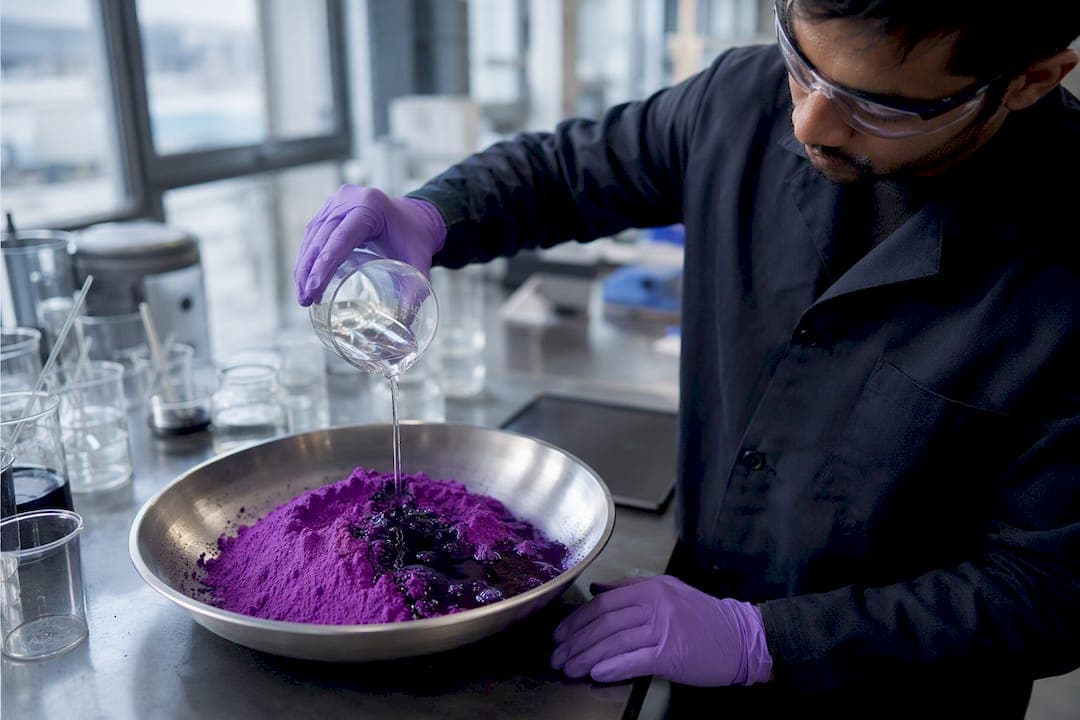
Wetting agents are typically low molecular weight molecules that reduce surface tension and speed initial pigment incorporation into the medium. Polymeric dispersants carry anchor groups that bind to the pigment surface plus soluble side chains that extend into the medium, providing steric stabilization that keeps particles apart long after initial wetting is complete. Optimized dispersant selection and dosage can keep tint strength high while reducing overall pigment usage, which matters directly to formulation cost, not just color performance.
Side-chain solubility and molecular weight both need to match the specific medium; a dispersant that works well in an acrylic system can cause viscosity spikes or outright incompatibility in a polyurethane system. Anti-settling fillers and rheology modifiers help lock in dispersion gains after milling is complete, and controlled flocculation techniques can be deliberately engineered in TiO2-coextended systems to manage hiding power without sacrificing tint strength.
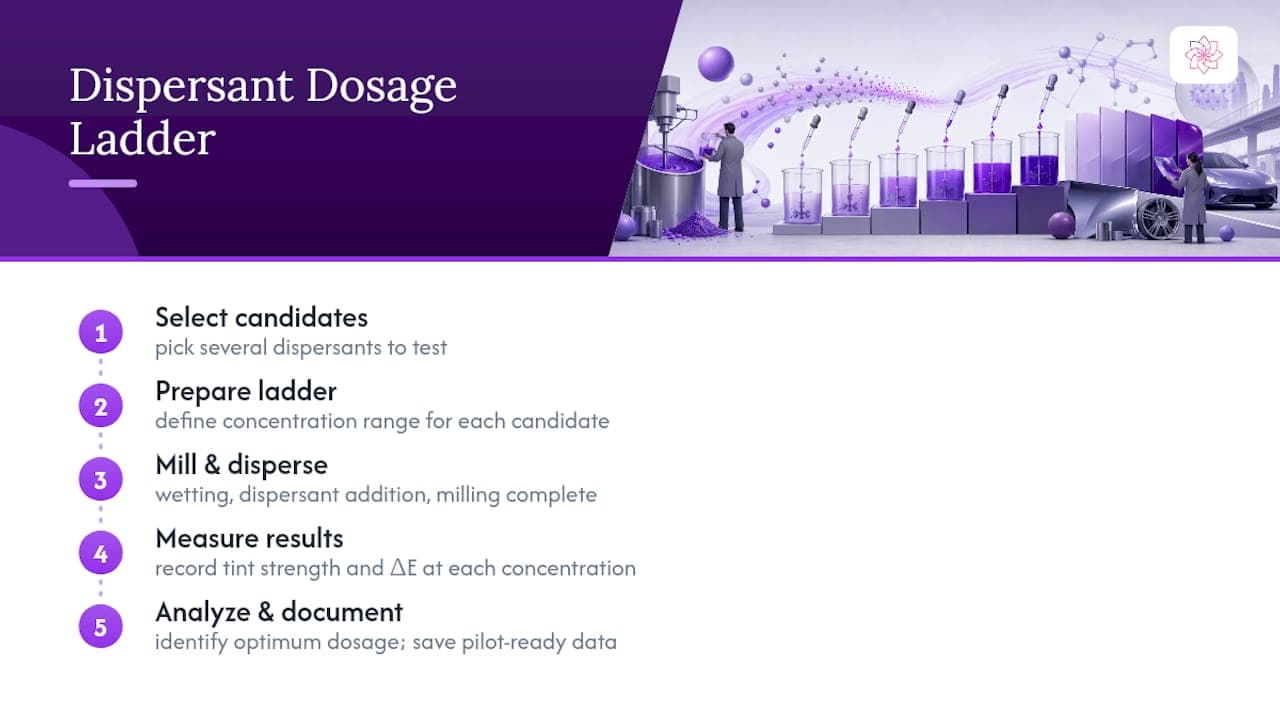
Astra R&D application guidance recommends a structured dosage ladder, testing several dispersant candidates across a defined concentration range and measuring both tint strength and ΔE at each point, rather than adjusting one variable at a time by trial and error. A structured ladder approach identifies the true optimum dosage faster than sequential single-point testing, and it produces the documentation a pilot review will need later.
What Pilot Protocol Confirms a Fix Before Full Production?
A lab-scale fix means nothing until it survives a pilot run under production-representative conditions.
- Design the pilot for parity, not convenience. Use the same recipe ratios and equivalent mixing energy per unit volume as the intended production equipment, and sample at three points: millbase, mid-process, and final drawdown.
- Set numeric acceptance criteria in advance. Typical gates include tint-strength recovery to within a defined percentage of the target standard, ΔE below an agreed threshold, and viscosity within the process window. Decide the go/no-go rule before the pilot starts, not after seeing the data.
- Set incoming QC frequency for pigment lots. Log mill speed, bead wear, and dispersant lot number on every batch, since a pilot that passed on one dispersant lot can fail on the next if lot-to-lot variation isn't tracked.
- Escalate failures with full records. A failed pilot should trigger a return to the diagnostic step with the mill logs and drawdown data attached, not a second guess at the same fix.
How Do Storage Conditions Affect Shelf-Life Color Retention?
Color retention problems often surface weeks or months after a batch passes initial QC, which makes storage conditions one of the more underappreciated variables in color strength loss.
Extended storage at elevated temperature accelerates flocculation in marginally stable dispersions, since heat lowers medium viscosity and gives loosely stabilized particles more mobility to re-agglomerate. A dispersion that measured acceptable tint strength at the point of manufacture can drift measurably weaker after eight to twelve weeks in a warm warehouse, even with no change to the formulation itself.
Humidity introduces a separate risk for water-reducible and certain solvent-borne systems, where moisture ingress through packaging can disrupt the electrostatic or steric stabilization the dispersant provides. Settling is the most visible symptom: a hard, difficult-to-redisperse cake at the bottom of a drum usually indicates that flocculation began well before the can was ever opened.
Accelerated storage testing, holding samples at elevated temperature for a defined period and comparing tint strength against a room-temperature control, gives formulators a shelf-life estimate without waiting out a full real-time aging study. Track viscosity alongside color strength during these trials, since a viscosity climb frequently precedes a measurable drop in tinting power by several weeks. Batches intended for long transit times or extended warehouse dwell benefit from a rheology modifier that locks the dispersion in place, reducing the settling and reflocculation risk that would otherwise erode color strength before the product ever reaches an applicator.
Does Pigment Purity Affect Color Strength Consistency?
Pigment purity and crystal composition explain a meaningful share of the batch-to-batch variability that formulators otherwise attribute to their own process.
Commercial pigment grades vary in trace metal content, surface treatment consistency, and crystal phase purity even within the same nominal chemical class. Two lots labeled identically by chemical family can differ in tinting strength by a noticeable margin if one carries a higher proportion of a weaker-absorbing polymorph or a less uniform surface treatment application.
Surface treatments themselves, applied to control dispersibility, gloss, and flocculation resistance, are not always applied with the same coverage or thickness across production runs. A pigment lot with an underapplied surface treatment will disperse less completely under identical milling conditions, producing a coarser effective particle size and lower apparent color strength even though the raw pigment chemistry is nominally the same.
This is why incoming QC on pigment lots matters as much as QC on the finished formulation. A tint-strength check against a retained reference standard for every new pigment lot, not just periodic ones, catches purity drift before it propagates into a full production batch. Formulators who skip this step often chase a "bad dispersion" problem for days before discovering the pigment lot itself was the variable that shifted.
What Environmental Factors Cause Color Strength Loss After Application?
UV exposure, heat, and humidity each degrade color strength through distinct mechanisms once a coating or ink is in service, and distinguishing between them determines whether the fix belongs in the formulation or in the application guidance.
UV exposure breaks down chromophore structures in organic pigments over time, a photodegradation process that is inherent to the pigment chemistry rather than a dispersion defect. Inorganic pigments generally resist this far better than organic pigments, which is why exterior-rated formulations lean toward inorganic or UV-stabilized organic grades for applications with sustained sun exposure.
Heat cycling accelerates two separate problems: it speeds any latent flocculation in a marginally stable dispersion, and in some binder systems it can promote solvent-induced recrystallization of the pigment itself, altering the crystal phase and the light absorption that depends on it. Humidity affects moisture-sensitive binder systems most directly, where water ingress can disrupt film integrity and expose pigment particles to conditions that accelerate both fading and surface degradation.
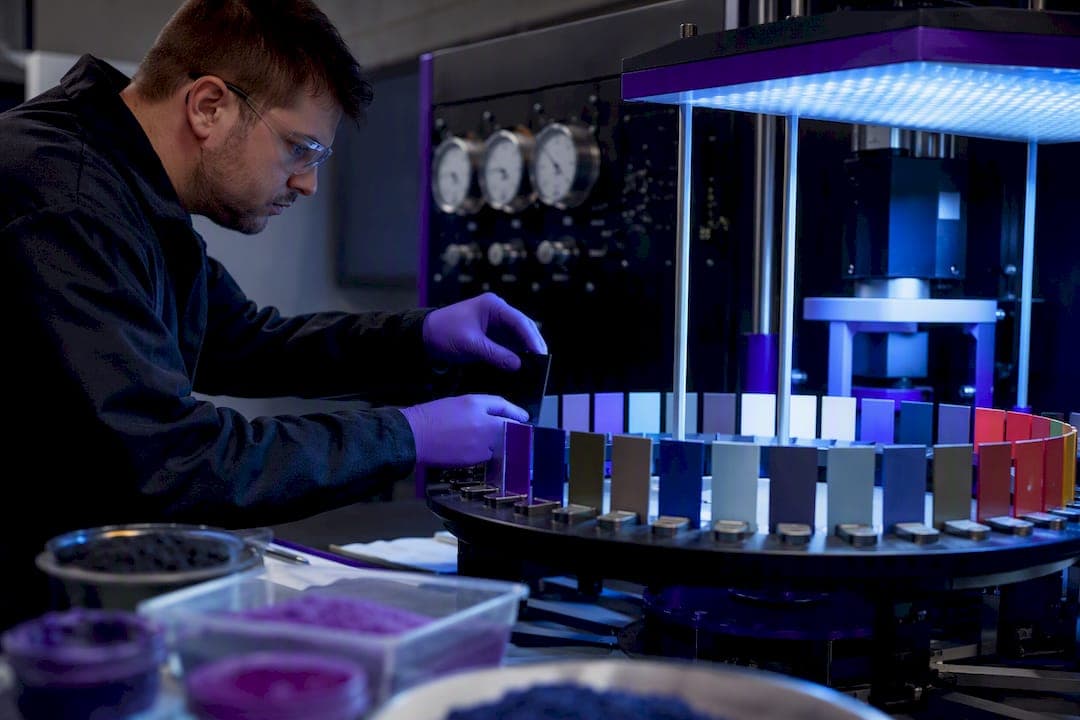
None of these are dispersion problems in the lab sense, but they interact with dispersion quality: a well-deflocculated, properly milled dispersion tends to show more uniform, predictable fading behavior than a marginally flocculated one, where uneven particle distribution produces patchy or accelerated apparent color loss under environmental stress. Weathering and accelerated UV chamber testing remain the standard way to quantify this before a product ships into an environment where sustained exposure is expected.
What Do Formulators Consistently Get Wrong About Color Strength Loss?
Most misdiagnosed color strength problems get blamed on the pigment supplier when the actual cause is dispersion process drift, a dispersant dosage that was never re-validated after a raw material change, or a mill condition that shifted gradually enough to go unnoticed. Supplier collaboration on dosage ladder trials consistently shortens time-to-resolution compared to internal trial-and-error, because a dispersant manufacturer has visibility into failure modes across many formulations that a single production team rarely sees. The operational payoff for getting this right is concrete: reduced pigment overuse, fewer reworked batches, and color consistency that holds through the shelf life a customer actually experiences.
— Astra R&D Team
Get Technical Support for Restoring Tint Strength
When a dispersion problem has already been diagnosed through rub-up testing, Hegman inspection, or a spectrophotometric drawdown, the next step is validating a fix with the right dispersant chemistry rather than guessing at a reformulation. ASTRA DISP® is Astra-chemical's polymeric dispersant family, built with the anchor-group and soluble side-chain architecture that stabilizes deflocculated pigment particles and holds tint strength through storage and application.
For teams also managing foam-related dispersion inefficiencies during milling, Astra-chemical's non-silicone defoamers address the entrainment issues that can complicate a high-shear dispersion process without introducing silicone contamination risk. Astra-chemical's technical team supports a structured dosage ladder trial rather than a single-point swap, measuring tint strength and ΔE at each concentration so the recommended dosage is backed by data before it reaches full production. Request a sample of ASTRA DISP® and schedule a pilot consultation with Astra-chemical's technical support team to run that dosage ladder against your specific pigment and binder system.
Sources
- Tinting Strength of Paints, Coatings, and Inks - All You Need To Know
- The Importance of Particle Size in Liquid Coatings
- An efficient approach to dispersing pigments
- The Anatomy of Multipurpose Solventborne Colourants
FAQ
What Is the Fastest Way to Confirm Flocculation?
The rub-up test is the fastest field check: rubbing a wet film and observing a color shift indicates active flocculation, though it should be paired with a spectrophotometric drawdown to quantify severity.
Can Color Strength Loss Be Fixed Without Changing the Pigment?
In most cases yes, since dispersion process drift and dispersant dosage account for the majority of tint-strength problems; a dosage ladder trial with Astra-chemical's ASTRA DISP® dispersants often restores strength without a pigment grade change.
Does Over-Grinding Actually Weaken Color?
Yes, over-grinding can delaminate pigment surface treatments and release reactive ions that interfere with binder chemistry, which reduces both color stability and shelf life even though the mill appears to be doing its job correctly.
How Long Should Accelerated Storage Testing Run?
There is no single fixed duration; the test period should be set against your product's expected shelf life and reviewed against both tint-strength drift and viscosity change at each checkpoint.
Recommended
- Coating Additives Guide: Selection, Chemistry & Formulation (2026) | ASTRA CHEMICAL
- Switching Coating Additive Suppliers: A Step-by-Step Migration Guide | ASTRA CHEMICAL
- 7 Water-Based Coating Formulation Mistakes and How to Fix Them | ASTRA CHEMICAL
- ASTRA CHEMICAL — Dispersants, Defoamers & Coating Additives Manufacturer
Testing additives for this application?
Send us your current formulation challenge and our technical team will recommend an ASTRA product package for lab screening.