Additive Supplier Collaboration: 2–3 Partners, Faster Formulation
Additive Supplier Collaboration: 2–3 Partners, Faster Formulation ! Formulation scientists reviewing an additive trial sample Collaborating with additive suppliers moves procurement from transactional buying to joint formulation and faster product improvements.

Collaborating with additive suppliers moves procurement from transactional buying to joint formulation and faster product improvements. The primary near-term value is quicker formulation iteration through supplier lab expertise and sample support, not a better price per kilogram. Your first step: select two or three strategic additive suppliers and run a focused pilot with a clear brief and defined metrics.
TL;DR:
- Start with two or three strategic suppliers that have formulation expertise, and define objectives, timelines, shared KPIs, decision authority, and confidentiality terms before the pilot.
- Ask suppliers for a starting formulation and compatibility testing, sign an NDA covering intellectual property, and assign application testing and requirements to your team.
- Run short sample cycles with explicit go, adjust, or stop gates; track baseline quality, lead time, cost per unit, and formulation speed before scaling.
- Use a governance team across procurement, research, and operations, with quarterly reviews and shared scorecards covering supplier delivery, quality, forecasting, and responsiveness.
- Begin with shared dashboards or standard templates, and add system integrations only when transaction volume and process complexity justify the investment.
Procurement and technical teams can start with four moves, taken in order.
- Segment your suppliers. Choose strategic suppliers with R&D or formulation capability for the pilot, and leave commodity vendors out of it.
- Write a collaboration brief. State the objectives, timeline, success metrics and data-sharing needs, so both sides work from the same document.
- Align internal stakeholders. Bring procurement, R&D, QA and operations into the same room and assign a single point of contact for each function.
- Agree on pilot governance. Fix the meeting cadence, decision authority and confidentiality terms before any material changes hands.
This sequence follows the same logic as supply chain collaboration guidance, which recommends starting with two or three strategic suppliers and simple shared KPIs rather than enterprise-grade technology.
Pro Tip: Put the decision authority in writing on the brief. Pilots stall most often when nobody on either side can approve a formulation change without escalating.
What does collaboration deliver for quality, cost, and resilience?
Stakeholders will ask what the effort buys. These are the outcome-focused answers:
- Faster time to formulation: supplier technical labs shorten the path from requirement to workable recipe.
- Cost and working capital: joint planning and SKU rationalization reduce inventory and complexity on both sides.
- Resilience: closer partners tend to deliver more reliably and give you priority access when capacity is constrained.
- Quality and sustainability: shared process knowledge catches defects earlier and cuts waste.
Effective collaboration moves beyond transactional, price-focused purchasing toward joint business planning with shared long-term objectives, and that shift is where the benefits above come from. Price negotiation alone cannot produce them.
How do you structure governance and SRM so collaboration repeats?
A pilot proves the idea. Governance makes it repeatable. Supplier relationship management programs begin with strategy design and stakeholder alignment, then add structured launch and governance, which Gartner describes as including quarterly reviews and supplier summits.
- Segment suppliers and concentrate resources on strategic partners. Each segment gets different treatment, so a dispersant partner with a lab gets a different cadence than a spot-buy vendor.
- Form an SRM governance team spanning procurement, R&D and operations, so technical and commercial decisions are made together.
- Adopt two-way scorecards with shared KPIs. Suppliers rate your forecasting and responsiveness, and you rate their delivery and quality. McKinsey's work on deeper collaboration pairs joint business planning with two-way scorecards and value-sharing mechanisms.
- Keep a steady cadence: quarterly business reviews, supplier summits, advisory councils and continuous feedback.
Trust is the hidden variable. Supplier skepticism is the most common hurdle when shifting to a collaborative model, and it eases only when suppliers see you act on their feedback.
How do you work with additive suppliers and formulation partners?
Additive suppliers are different from most vendors because their value sits in chemistry expertise and laboratory capacity. Ingredient and material suppliers often run formulation labs and analytical groups that buyers can use for starting formulations, compatibility studies and feasibility testing. Use that capacity deliberately:
- Ask for a starting formulation and a feasibility or compatibility study before you build your own recipe from scratch.
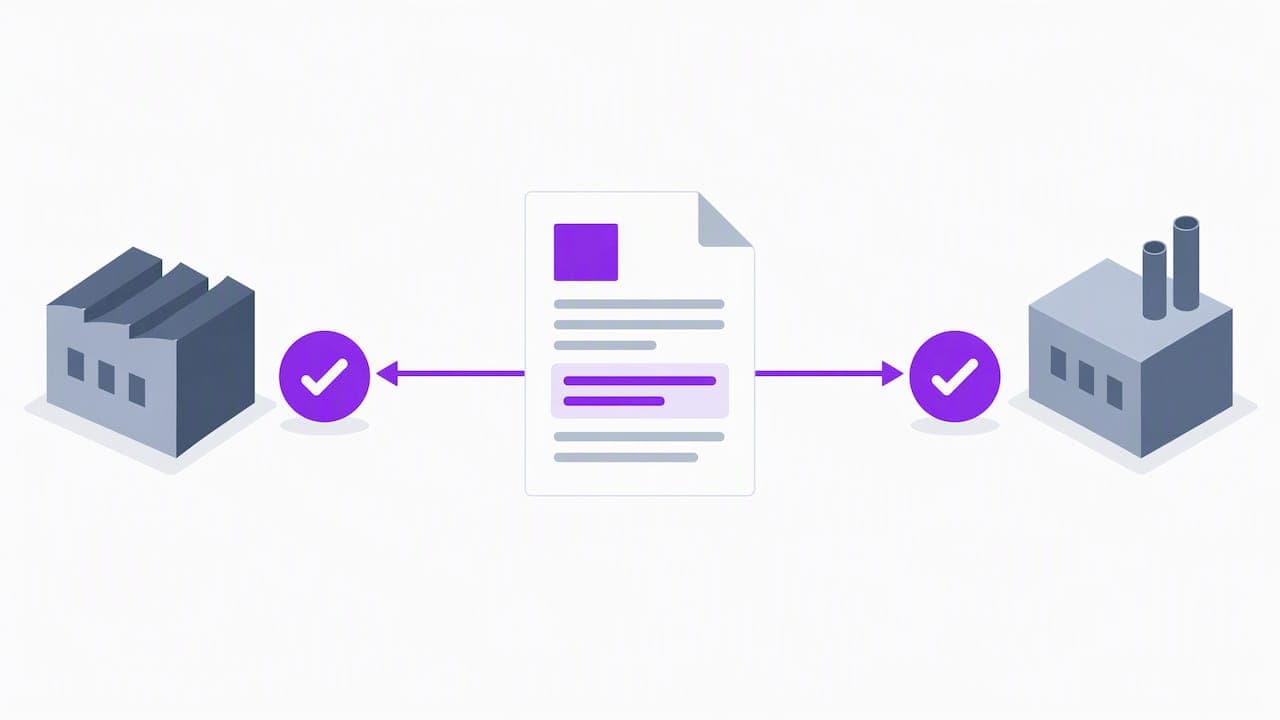
- Sign an NDA with clear IP and confidentiality language, so both sides can share materials and formulation details freely.
- Define roles. The supplier supplies chemistry expertise and lab testing. You drive application testing and set the requirements.
- Set rapid sample and test cycles with decision gates, so each iteration ends in a go, adjust or stop decision.
Pro Tip: Share your failure modes, not just your target specs. Telling a supplier that a coating shows foam defects at a given line speed gives their chemists a problem to solve rather than a product to ship.
If sourcing continuity across markets is part of your project, a specialist such as RJR Worldwide's chemical sourcing division can complement a technical partnership with supply and compliance support.
Which tech and data practices lower friction?
Technology should follow the relationship, not lead it. These practices scale collaboration without burying a small pilot in software:
- Start with shared dashboards or portals that expose forecasts, inventory and scorecards to both parties.
- Add integrations or open APIs once volume and complexity justify the investment. Platforms such as Siemens AM Network show how order-to-delivery workflows can be digitized and connected to buyer systems.
- Automate scorecards. Gartner notes that automation improves efficiency and helps extract more supplier ideas, because teams spend less time on manual admin.
- Use standardized templates when a supplier lacks systems, then move to portal access as the relationship matures.
How do you design a pilot and choose KPIs?
Keep the pilot narrow. A tight scope and regular checkpoints can produce evidence faster than a broad program that never reaches a decision.
- Set success criteria for quality, lead time and cost to serve before work starts.
- Track a short KPI list: on-time delivery, defect rate, lead time, cost per unit and speed to formulation.
- Record baselines and hold regular checkpoints, so improvements can be attributed to the collaboration.
- Decide scale-up triggers up front, such as a target defect reduction or a target cut in time to market.
Shared KPIs and a small set of strategic suppliers produce meaningful improvements without enterprise-grade technology, which makes this pilot design realistic for mid-sized manufacturers.
What does a pilot look like from brief to scale decision?
Here is an anonymized illustration of how the pieces fit together, not a documented customer result:
- Selection and NDA: a coatings manufacturer picks an additive supplier with lab capability and signs an NDA.
- Lab work: the supplier delivers a starting formulation and runs compatibility tests against the buyer's resin system.
- Iteration: samples are tested on the buyer's line, and tweaks are applied over short cycles.
- Outcome: scorecarded results show a quality improvement, and the joint team recommends scaling to additional product lines.
Why supplier technical depth is a competitive asset
Our view is that a supplier's formulation lab is the most underused asset in most procurement portfolios. Buyers audit suppliers for price and delivery, yet rarely ask what a supplier's chemists could solve for them. The teams that move fastest treat that lab as an extension of their own R&D, with shared briefs and shared metrics. That is how we approach collaborative pilots: lab-backed technical support, short cycles and clear decision gates.
— Astra R&D Team
How can you start a collaborative development project with us?
We work with manufacturers as a direct development partner. Our team provides formulation guidance and technical consultation across our product families, including ASTRA DISP®, ASTRA REO®, ASTRA DF®, ASTRA F® and ASTRA REACT®.
- Request samples of the product family closest to your formulation challenge.
- Book a technical consultation to scope a pilot, its metrics and its timeline.
Current pricing details are available on our site. Tell us your application, and we will propose a pilot plan.
FAQ
What is supplier collaboration and what are its benefits?
Supplier collaboration means buyers and suppliers plan and develop together instead of negotiating price alone. Benefits include faster formulation, better quality, lower cost to serve and more resilient supply.
How do companies communicate with suppliers?
Most use a mix of single points of contact, shared dashboards or portals, and a regular review cadence. Gartner points to quarterly reviews, supplier summits and feedback surveys as common governance channels.
What are two types of suppliers?
A useful split is strategic suppliers and transactional suppliers. Strategic ones, such as additive suppliers with formulation labs, merit joint planning and pilots, while transactional ones are managed on price and delivery.
What is SAP supplier network collaboration?
It is a platform approach to sharing orders, forecasts and schedules between buyers and suppliers digitally. Similar platforms use open APIs and part catalogs to connect buyer and supplier systems.
Sources
Testing additives for this application?
Send us your current formulation challenge and our technical team will recommend an ASTRA product package for lab screening.